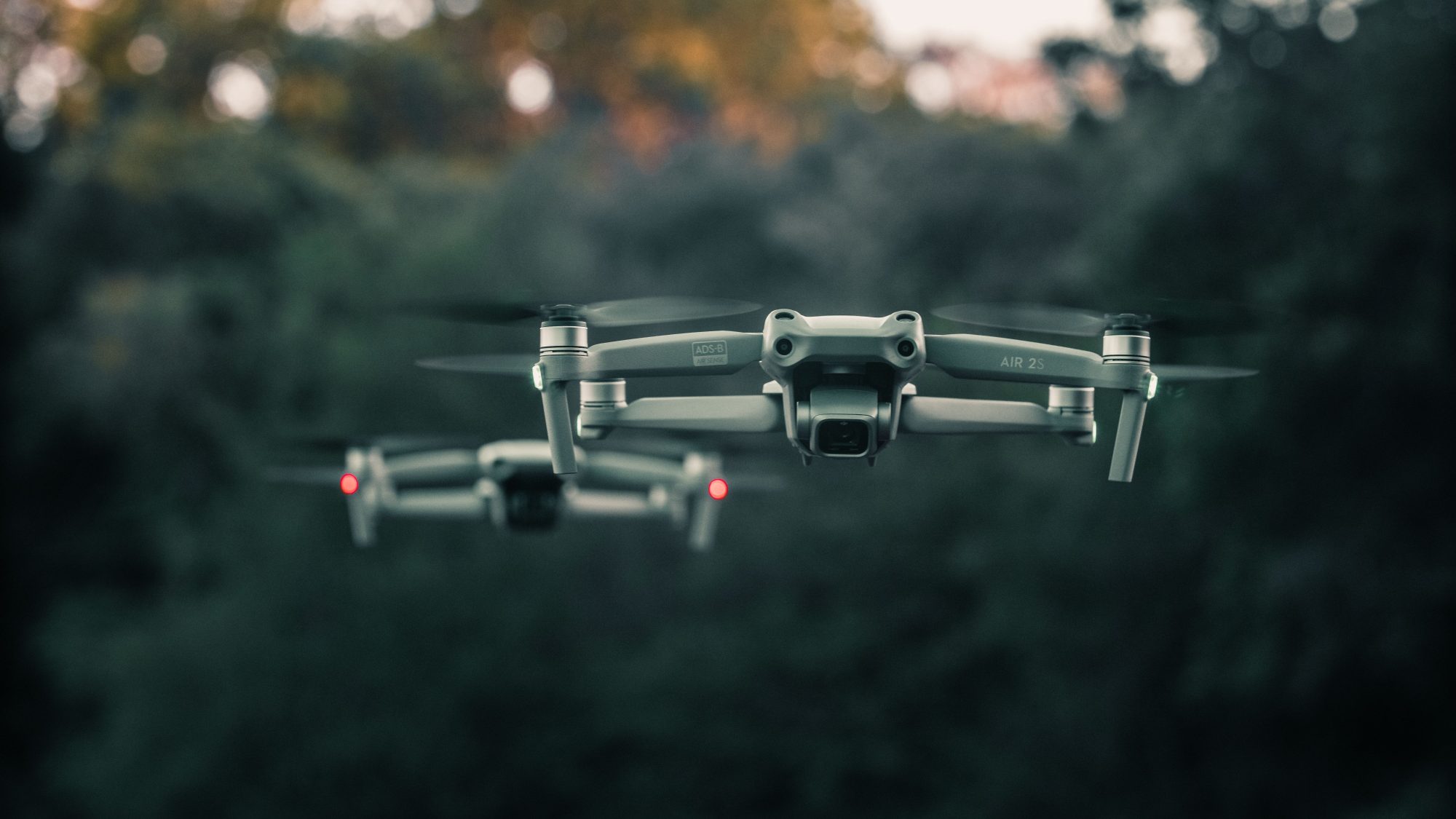
The short answer is yes. Security drones are legal in the United States, but they operate under a layered set of rules covering who can fly them, where, how high, and what they are allowed to record. Getting any of those wrong can mean fines, grounded operations, or a privacy complaint.
This guide walks through the federal rules that apply, the limits that still restrict many security use cases, and what property owners should confirm before bringing drone coverage onto a site. For properties that want to see how this technology fits into a broader plan, drone security and wireless camera services are one way to add aerial coverage without managing the flight rules yourself.
Who Regulates Drones in the US
The Federal Aviation Administration controls the nation's airspace, which includes the airspace over your property. That surprises many owners. You may own the land, but you do not control the sky above it in the way you control the ground. The FAA sets the rules for how unmanned aircraft fly, and those rules apply whether the drone belongs to a business, a security provider, or a hobbyist.
The FAA regulates safety and airspace. It does not regulate privacy. That second layer sits with state and local law, and it matters just as much for security use.
Part 107: The Rule That Governs Commercial Drone Flights
Security drone use is a commercial operation, which puts it under the FAA's Part 107 rule for small unmanned aircraft. The main requirements are:
A certified pilot. The person flying must hold a Remote Pilot Certificate, earned by passing an FAA knowledge test. Owning a drone does not make someone legally able to fly it for security work.
Weight limit. Part 107 covers aircraft under 55 pounds, which includes nearly every security drone in common use.
Altitude limit. Flights are generally capped at 400 feet above ground level.
Visual line of sight. The pilot must be able to see the drone with their own eyes throughout the flight. This is the rule that shapes most security applications, and it is covered in more detail below.
Airspace authorization. Flying in controlled airspace, such as near an airport, requires approval from the FAA before the flight.
Registration and Remote ID. Drones must be registered, and most must broadcast Remote ID, which works like a digital license plate that lets the FAA and law enforcement identify a flight in progress.
Night operations are allowed under current rules, provided the drone has proper anti-collision lighting and the pilot has completed the required training.
The Line of Sight Problem
The visual line of sight requirement is the biggest practical limit on security drones today. A drone patrolling a large industrial site or a sprawling property might need to fly well beyond where its pilot can see it. Under standard Part 107 rules, that is not permitted.
Operators can request a waiver to fly beyond visual line of sight, and the FAA has granted them for qualified operations. In August 2025, the FAA also proposed a new rule, Part 108, that would replace much of the case-by-case waiver process with standardized permits and operating certificates for these flights. Rules like this take time to finalize and implement, so anyone planning around beyond-line-of-sight coverage should check the FAA's current status rather than assuming the change has taken effect.
For most property owners, the takeaway is practical. Drone coverage today usually works best on sites where the pilot can keep the aircraft in view, or where a provider already holds the right waiver.
Privacy Rules Are Separate and Often Stricter
Even a flight that is fully compliant with FAA rules can create legal trouble if it captures the wrong thing. Many states have their own drone privacy laws that restrict recording people on private property without consent, and some treat certain kinds of surveillance as voyeurism or harassment.
A few principles keep security drone use on the right side of those laws:
Keep recording focused on the property being protected, not neighboring homes or yards
Avoid capturing windows or private areas on adjacent property
Post notice where appropriate that the site uses aerial and camera monitoring
Limit how long footage is kept and who can view it
These rules vary by state and sometimes by city, which is why local review matters. A drone program that works in one jurisdiction may need adjustment in another.
Using Drones Alongside Cameras and Patrols
Drones work best as one layer in a security plan, not a replacement for everything else. They are strong at fast response and wide coverage, but they cannot be everywhere at once, and weather or battery limits can ground them.
Pairing aerial coverage with fixed camera monitoring and installation gives continuous visibility on key points, while the drone covers gaps and responds to alerts. Adding patrol services puts a trained person on the ground to act on what the technology detects. Each layer covers a weakness in the others.
What to Confirm Before You Use a Drone for Security
Whether you operate a drone yourself or hire a provider to do it, these questions are worth answering before the first flight:
Is the pilot certified? Ask to see the Remote Pilot Certificate. A provider that cannot produce one is not operating legally.
Is the operation insured? Drone flights carry real liability if something goes wrong. Confirm coverage specific to drone operations.
Are airspace rules covered? If your property is near an airport or other controlled airspace, ask how authorization is handled.
What is the recording and retention policy? Know what is captured, where it is stored, and how long it is kept.
Does the provider understand local privacy law? A provider with experience in your state will already know where the boundaries sit.
Is the equipment compliant? Some federal contracts and funding programs restrict certain foreign-made drones, so confirm requirements if your property has federal ties.
Final Thoughts
Security drones are legal, and they are becoming a normal part of how larger properties are protected. The legality depends on doing it properly: a certified pilot, compliance with FAA flight rules, respect for privacy law, and a clear plan for how footage is handled.
The properties that get the most from drone coverage are the ones that treat it as part of a layered program and work with a provider that handles the regulatory side as a matter of routine.