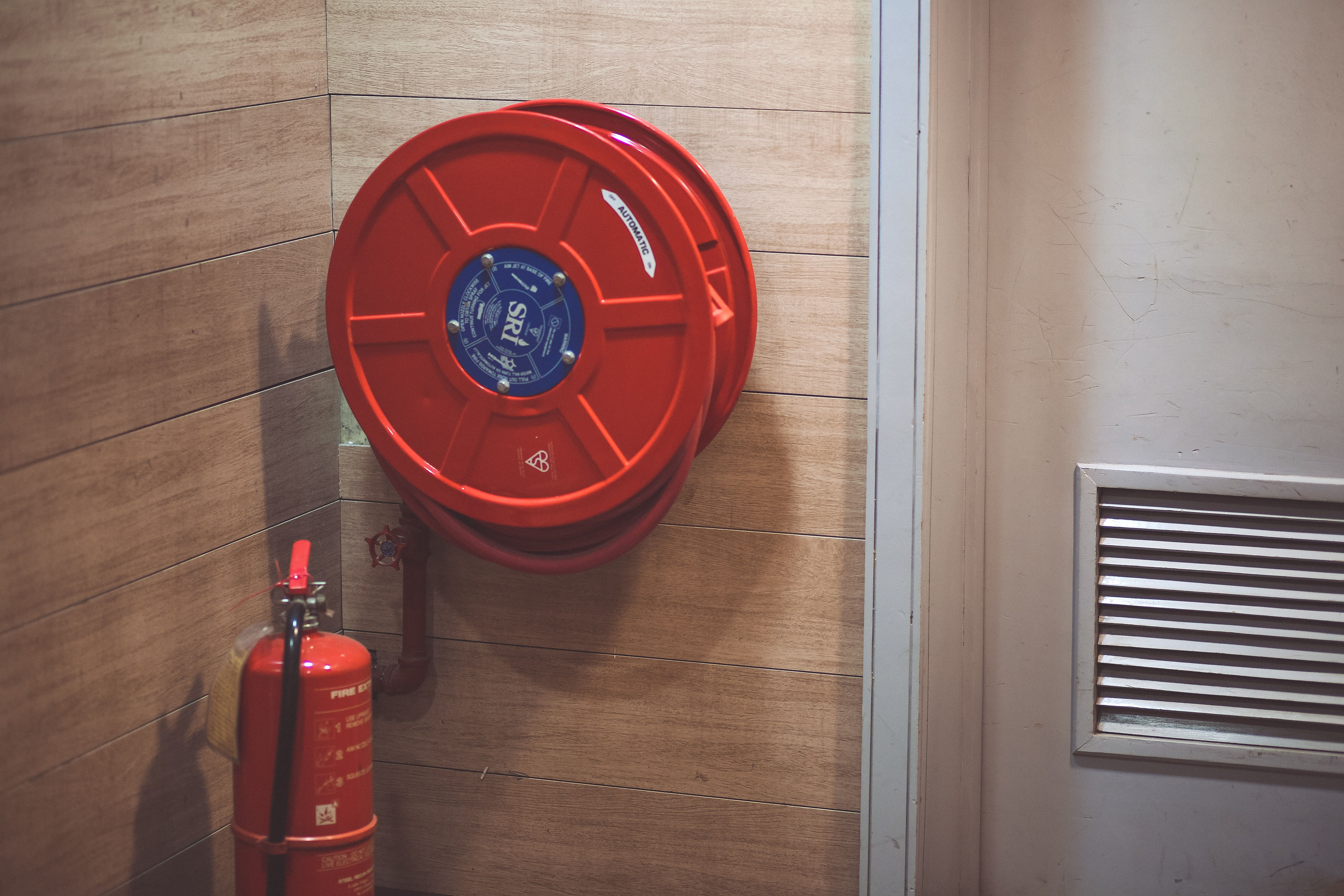
When a building's fire protection system goes offline, even temporarily, the property does not become less dangerous. It becomes more dangerous, and the legal obligation to protect occupants does not pause with it.
Fire watch security is the solution that fills that gap. It is a formal, documented measure that places trained personnel on-site to monitor for fire hazards, maintain safe egress routes, and notify the fire department if a threat is detected. Fire watch security services are deployed any time a property's built-in fire protection is compromised or unavailable, and in many cases they are not optional. They are a legal requirement under national fire codes and local ordinances.
This guide explains exactly what fire watch security is, what situations require it, what trained fire watch personnel do on-site, and what property owners and managers should expect when a fire watch is activated.
What Is Fire Watch Security?
The International Fire Code defines a fire watch as a temporary measure intended to ensure continuous and systematic surveillance of a building by one or more qualified individuals for the purpose of identifying and controlling fire hazards, detecting early signs of fire, activating an alarm, and notifying the fire department.
In practical terms, fire watch security replaces the automated detection and suppression capabilities of a fire alarm or sprinkler system when those systems are unavailable. A trained fire watch officer does manually what the building's systems would do automatically: patrol the property on a documented schedule, identify hazards before they escalate, and initiate an emergency response the moment a threat is identified.
Fire watch is not firefighting. The role of a fire watch officer is detection, notification, and evacuation assistance. Their presence ensures that the window of risk created by a system outage is covered by a trained, accountable human presence rather than left unmonitored.
When Is Fire Watch Required?
Fire watch is required by the National Fire Protection Association (NFPA) and the International Fire Code (IFC) in several clearly defined situations. Local fire marshals and authorities having jurisdiction (AHJ) may impose additional requirements beyond the federal baseline.
Fire Alarm System Outage
According to NFPA 101, when a required fire alarm system is out of service for more than four hours in a 24-hour period, the authority having jurisdiction must be notified, and the building must either be evacuated or an approved fire watch must be provided. This applies to any situation where the alarm system is offline, whether due to equipment failure, power outage, maintenance, or system upgrades.
Sprinkler System Outage
NFPA 101 also requires a fire watch when an automatic fire sprinkler system is out of service for more than 10 hours in a 24-hour period. Sprinkler systems are taken offline for a range of reasons including pipe repairs, system testing, freezing conditions, and building renovations that require temporary disconnection.
Hot Work Operations
Welding, cutting, grinding, and other hot work activities create a persistent ignition risk, particularly in areas where combustible materials are present. Many fire codes and insurance policies require a fire watch during and after hot work operations, with personnel remaining on-site for a defined period after work stops, typically 30 to 60 minutes, to monitor for smoldering materials that may not ignite immediately.
Construction and Renovation Sites
Active construction sites often require fire watch coverage because permanent fire suppression systems are not yet installed or are temporarily disabled during construction phases. Open structures, exposed materials, and the frequent presence of hot work make fire watch a standard component of construction site safety planning.
System Malfunctions and Nuisance Alarms
A fire watch is also required when fire protection systems are in a trouble or supervisory mode for more than eight hours, or when excessive accidental activations or nuisance alarms indicate that the system is not functioning reliably. A system that triggers false alarms repeatedly may be disabled by building management to avoid disruption, which immediately creates a fire watch obligation.
Events with High Occupancy
Local fire marshals may require fire watch coverage for large events where occupancy levels exceed normal building capacity or where the nature of the event, such as open flame displays, pyrotechnics, or densely packed crowds, creates a higher-than-normal fire risk.
What Does a Fire Watch Officer Do?
Fire watch personnel are not passive observers. Their duties are specific, documented, and carried out on a strict schedule throughout the coverage period.
Systematic Patrols
Fire watch personnel conduct periodic patrols of the entire facility every 15 minutes if the facility has people sleeping, is an institutional facility, or is an occupied assembly facility. Facilities not meeting those conditions are patrolled every 30 minutes. Every patrol is logged with the time, the area covered, and any observations made.
Hazard Identification
During each patrol, the fire watch officer checks for potential ignition sources including frayed electrical wiring, improperly stored flammables, excess combustible materials, and blocked exits or stairwells. Any condition that could contribute to the start or spread of a fire is documented and reported immediately.
Egress Maintenance
A critical part of the fire watch role is confirming that all exits, stairwells, and corridors remain clear and accessible throughout the coverage period. Fire watch personnel are responsible for maintaining means of egress and ensuring evacuation routes remain functional at all times.
Emergency Notification and Evacuation
If a fire is detected or suspected, the fire watch officer activates the building alarm if it is functional, calls 911 with the exact property address and nature of the emergency, and assists occupants with evacuation. Fire watch personnel remain on the property after notifying the fire department to assist with information and to establish contact with the building owner or manager.
Documentation and Compliance
Fire watch is a documented activity, not just a physical one. Every patrol should be recorded in a written log that captures the time of each sweep, the areas covered, any hazards observed, and any actions taken. This documentation serves as proof of compliance for the local fire marshal, the property's insurer, and in the event of any incident, as a legal record of what occurred and when.
Property owners and managers who fail to implement a required fire watch, or who do so without proper documentation, face significant liability exposure. Beyond the legal consequences, an undocumented fire watch provides no verifiable evidence that the required coverage was actually carried out.
Professional fire watch providers like Door Guard Security Corp supply documented patrol logs as a standard part of service, giving property managers a complete, timestamped record of every coverage period.
What to Look for in a Fire Watch Provider
Not every security provider is equipped to handle fire watch correctly. When selecting a fire watch partner, consider the following:
Rapid deployment. A fire alarm or sprinkler outage can trigger a fire watch obligation within hours. A security provider that can deploy trained personnel quickly, including overnight and on weekends, is essential. Fire watch needs do not wait for business hours.
Familiarity with NFPA and local codes. Fire watch requirements vary by jurisdiction. A provider that understands both the national baseline standards and local fire marshal requirements ensures compliance without requiring the property manager to interpret the codes themselves.
Documented patrol logs. Every patrol should be recorded and available to the property manager and local authorities. A provider that does not offer standardized documentation is not a suitable fire watch partner.
Coverage for buildings and construction sites. Fire watch needs arise across very different property types. A provider with experience across both occupied commercial buildings and active job sites understands how patrol requirements, hazard profiles, and communication procedures differ between the two.
Final Thoughts
A fire watch is not a precaution businesses choose to take. In most cases it is a legal obligation triggered by a specific condition, and the consequences of failing to provide it range from regulatory penalties to significant liability exposure in the event of an incident.
The right fire watch provider deploys quickly, patrols on a documented schedule, understands the applicable codes, and gives property managers the paperwork they need to demonstrate compliance. Door Guard Security Corp provides professional fire watch services for commercial buildings, construction sites, events, and any property where fire protection systems are temporarily offline or unavailable.